The Sámi are the indigenous peoples found in northern areas of Scandinavia and Russia. Their rich culture and traditional lifestyles developed over thousands of years in response to the harsh coastal and tundra environments found in the far north.
So, who are the Sámi? There is a stereotypical view the Sami were all nomadic reindeer herders. Of course, there were and are Sámi reindeer herders, but there are also coastal Sami, mountain Sámi and forest Sámi. However, many of these cultural groups have not been nomadic for hundreds of years and combine fishing, farming, and hunting activities as part of their livelihoods. What defines and unifies these diverse Sámi groups is their language. There are in fact ten Sámi languages and dialects, but the most spoken is North Sami. The vast area of the far north spanning four countries where Sámi live is known as Sápmi.
The Sámi, like many indigenous peoples have historically faced persecution and robust pressure for assimilation by national governments. In the past Sámi were better known as ‘Lapps’ and early maps show the regions in which they lived as ‘Lapland’. Literature and documents dating from early period and well into the twentieth century use the term Lapp, which is now seen as derogatory. There is no doubt from both archaeological and place name evidence that the distribution of the Sámi in the past used to be much more extensive, but as the ethnic Norwegians and Swedes moved north, so the Sámi came to live in the northern most and least favourable areas.
Part of the reason for Sámi persecution was that the traditional beliefs and paganism were regarded as witchcraft, and these resulted in trials and subsequent burnings. It is well-documented that Sámi shamans (naodii) were meant to be great wizards and their drumming was particularly feared. In fact, only about 40 Sámi drums have survived as they were destroyed in the seventeenth and eighteenth century for fear of the shamans. Much knowledge of traditional beliefs went unrecorded as the Sami relied on oral, not written records. However, some fascinating details are known from witch trials and eighteenth-century travellers such as Linnaeus. The traditional beliefs were animistic, polytheistic and connected to the natural world. Seidi, were magical sites in the landscape, such as stones or special lakes. Stones were used as altars and sacrifices, such as fish oil and reindeer would be made to ensure luck in fishing and hunting. Bears were seen as particularly special, and if killed there were special rituals that needed to be undertaken.
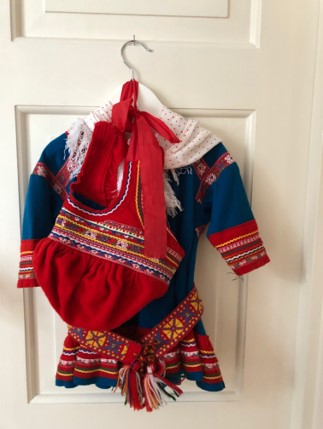
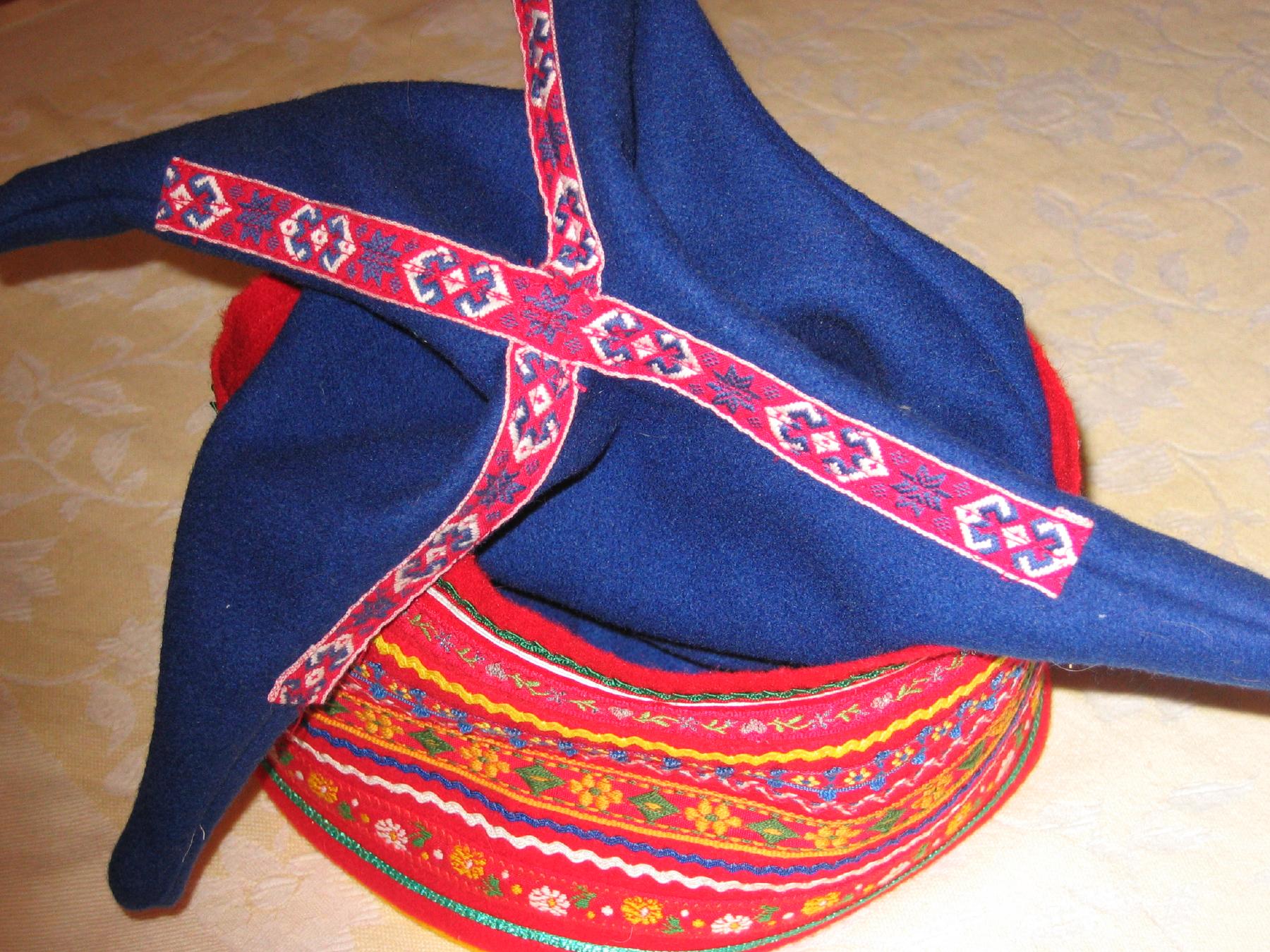
The Sámi are well-known for their distinctive colourful clothing made of wool or cotton, with ribbons as ornamentation. The clothes are often worn with pewter or silver brooches and buckle belts. Men and women wear a tunic known as a gáktiwith a high collar, the mens’ version being shorter. There are pronounced regional variants of costume in terms of cut, colour and decoration. Finnesko or Sámi boots with their turned-up fronts, are a clever adaptation to hold skis tight. Sami head wear has been closely studied. In the past, women in several areas wore a dramatic crown-like headdress known as a Ládjogahpir that had “horn” formed by a wooden stiffener. By the end of the nineteenth century this headdress hardly existed. Two versions exist about why it became a thing of the past these, either because the pietistic Laestadius Church, which is such a feature of Sami life, disapproved of finery or because it was associated with witchcraft and paganism by the official Church. The hat of the “Four winds”, worn by men, was also reputed to have supernatural powers. Traditional Sámi clothing also often features a shawl, lididni, and the headdress is a bonnet which replaced the elaborate Ládjogahpir.
The Sámi lavvu and goahti aretented structures, which were important forms of housing in the past as many groups were nomadic or semi-nomadic. Today, as one might expect, these picturesque and iconic tents are for tourists, though they also function as important political symbols. Sámi whose livelihoods were based on agriculture or fishing did not live in lavvu, but in turf or log houses.
Different Sámi groups have their own legends, and these have often been modified over time by interactions with others, such as the Kwen people. This can be seen, for example in relation to the Northern Lights. The Northern Lights are often known as Guovssahas “light that can be heard.” Some Sámi groups believe that these are caused by the spume of whales, Finnish Sámi that they are caused by a magical fox swishing its tail over the snow and others that they are the souls of the dead. Consistently though, the Sámi see the Aurora as dangerous. The Northern Lights should be respected and feared as otherwise the lights will swoop down and kill you.
The Sámi have two important musical forms: drumming and joiking. Joik singing has become better known because of the Disney film Frozen 2 a story which is loosely built on the environmental impact of a dam like the Alta dam. Spirit in the Sky sung by KEiiNO, was the Norwegian Eurovision entry in 2019 and featured a joik.
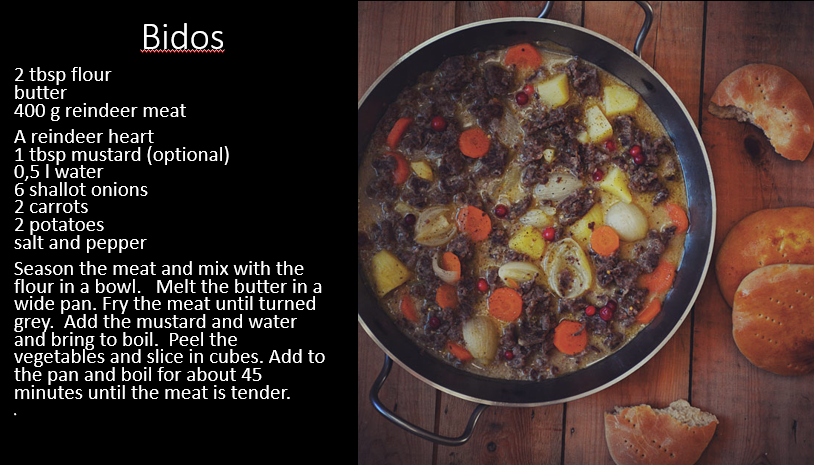
Food is a major element in any culture. The Sámi from early times imported grain from Russia which they traded for reindeer and skins, but the majority of their diets came from reindeer, fish and the collection of wild fruits. Traditional dishes include a type of flat bread and several types of reindeer stew such as Renkok and Bidos. Besides tasting the food, an easy way of experiencing the culture is by purchasing traditional crafts, duodji, such as carved wooden objects, metalwork or textiles.
After hundreds of years of suppression and assimilation there has been substantial political empowerment and a revitalisation of culture. A defining moment being the 1970 dispute over the Alta dam which saw a lavvu camped outside the Norwegian Storting (parliament). The battle over the Alta HEP project in in 1979 was lost, but it led to major changes in the long run. A milestone moment was the opening of the Sámi Parliament in Karasjok in 1989 by HRH King Olav V. Unsurprisingly, the building looks remarkably like a lavvu! There is still discontent. Reindeer herders feel that their livings are threatened by wind farms and mining. An example, being the huge and controversial copper mine that the Norwegian Government approved in Kvalsund, Finnmark, despite years of opposition from indigenous Sámi herders and fishermen.
Today there is now a clear recognition in Nordic countries that Sami were not well-treated, and their rights were disregarded. Now the Sámi cultural legacy is celebrated and is being developed. Sámi is now an official language in Norway. Norwegian schools must include Sámi history, there are some schools which teach in Sámi, there are reindeer schools and a Sámi university. This is an exciting time for Sámi. Finally, after many generations, a Sámi flag flies proudly above the tundra landscapes.
Bibliography
The Witches of Vardo Anya Bergman
The Mercies Kiran Millwood Hargrave
Stolen Ann-Helen Laesatius
https://www.laits.utexas.edu/sami
Film: Same Blod
 pennysperegrinations